With FIFA World Cup 2026 approaching, host cities face a paradox: Federal support is substantial, yet the operational lift required to turn dollars into on-the-ground capability is equally extensive. Security leaders are balancing compressed timelines, multi-agency coordination, technology procurement, workforce readiness, and public messaging, all while preparing for major metropolitan events. That gap between “funding awarded” and “capability delivered” is the readiness gap, and closing it is now one of the most important tasks for host cities.
The federal government has created dedicated funding streams to support World Cup security and preparedness, including FEMA’s standalone FIFA World Cup Grant Program (FWCGP), which provides $625 million for U.S. host city security and preparedness activities. In parallel, FEMA has also stood up a new Counter-UAS Grant Program, with $250 million awarded to host states to bolster drone detection. Additionally, DHS and FEMA will distribute a further $250 million in Fiscal Year 2027, with all states eligible.
These investments are significant, but they won’t create readiness on their own. Readiness comes from execution: operational planning, procurement discipline, training, and cross-jurisdiction coordination. Here’s a step-by-step guide on how to turn federal funding into public protection.
Closing the Funding-to-Readiness Gap
Major event funding typically arrives when planning is underway and the operational environment is already complex. The FIFA World Cup in 2026 adds a few unique stressors that make the readiness gap more likely.
First, it’s a distributed event that covers more than just stadiums. Cities must secure fan zones, transit hubs, training sites, and high-visibility public spaces, many of which are “soft target” environments outside controlled perimeters.
Second, the World Cup requires multi-agency coordination. Public safety, emergency management, transit security, venue operations, IT, communications teams, and federal partners all have overlapping responsibilities, different tools, and different authorities. Coordination is not a given, and it must be effective to effectively protect the public.
Third, many of the most important capabilities like drone detection and real-time situational awareness require both technology and governance. Detection tools without a shared operating picture or escalation framework can actually increase confusion rather than reduce risk.
Finally, federal grants typically include documentation requirements, operational constraints, and reporting expectations that can slow procurement if cities don’t have a dedicated “grant-to-ops” workflow. FEMA’s broader Homeland Security Grant ecosystem has long shown that the cities with the strongest grant management and capability-building discipline convert dollars into outcomes faster.
How to Operationalize Federal Security Grants: A FIFA Host City Playbook
To close the funding-to-readiness gap, host cities need to treat grants less like a financial event and more like an operational program. The most successful approach is a structured “grant-to-ops pipeline” that moves from risk assessment to deployment without losing momentum in procurement, governance, or training.
1. Start With a Capability Map, Not a Shopping List
One of the most common failure modes in grant-funded security programs is treating a grant award as permission to purchase. But procurement should come after planning. The faster path is to define the capabilities you’re trying to build. Then match tools, staffing, and procedures to those capabilities.
For World Cup 2026, most host cities will need to map and strengthen capabilities across crowd management, transit security, communications, intelligence coordination, incident command integration, and airspace awareness. FEMA’s World Cup grant program exists specifically to support these security and preparedness enhancements when aligned to operational needs.
2. Build a Common Operating Map Across Stadiums and Cities
FIFA World Cup security is a complex operation. Many of the highest-impact disruptions happen outside controlled entry points, in locations like fan zones, transit chokepoints, or public plazas where dense crowds form quickly.
Cities should use early grant planning cycles to establish shared situational awareness across the broader event footprint. This includes ensuring that airspace alerts, crowd intelligence, incident reports, and operational status updates flow to the right command elements in real time. Even the best technology stack fails if incident command, venue ops, and transit security cannot coordinate during an evolving incident.
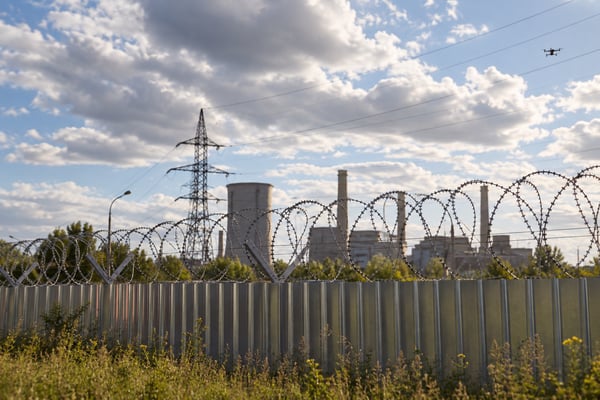
This is especially critical for drone incidents, where uncertainty and risk assessment drives responses. DHS has emphasized the need for rapid counter-drone readiness in the build-up to the World Cup, and FEMA has already awarded dedicated C-UAS funds to accelerate capability delivery.
3. Treat Drone Detection as an Operational Program, Not a Device
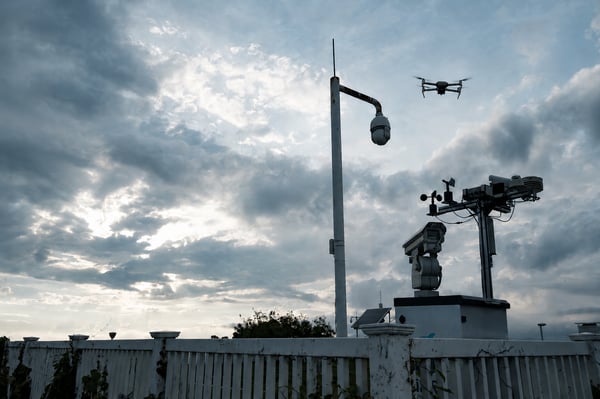
Drone detection is more complex than simply deploying sensors. True preparedness requires zoning, identification workflows, escalation thresholds, and jurisdictional clarity. In a World Cup environment, your teams must answer: Who is monitoring airspace? What is the response threshold for pausing operations? Who communicates to the public? Which partners have enforcement authority? What is the plan when the incident happens over a transit hub rather than the stadium?
The federal government’s investment in C-UAS grants reflects the reality that drones are no longer a niche issue for elite events. They are a mainstream risk factor that requires training and coordination. The cities that are ready in 2026 will be the ones that use grant funding to build repeatable operational playbooks and conduct exercises, not just procure hardware.
4. Run Tabletop Exercises Early and Repeatedly
A tabletop exercise is the fastest way to expose real readiness gaps before matchday. The most valuable exercises test ambiguity and coordination, not just tactical response. World Cup readiness requires scenarios that cross boundaries: a drone hovering near entry screening, a disruption in a fan zone, or an incident that affects VIP routes and transit operations simultaneously.
A strong approach is to run a tabletop with all stakeholders, execute an after-action plan, and repeat the exercise with updated policies within weeks—not months. This mirrors the World Cup reality: incidents will happen repeatedly, and copycat behavior is likely. The World Cup grant program is designed to support the training and exercise work required to make these improvements stick.
5. Plan for Procurement and Deployment
Even when funding is available, procurement and deployment have constraints, including lead times, training schedules, staffing availability, integration work, and policy approvals. One reason cities struggle is that they underestimate how long it takes to go from procurement to operational use, especially for capabilities that involve multiple agencies and new workflows.
To reduce delays, host cities should create an accelerated deployment plan that includes: integration milestones, staffing requirements, and training. Federal readiness programs generally reward this type of disciplined capability roadmap because it produces measurable progress.
6. Close the Communications Gap
During major public events, social media provides a real-time safety layer. A drone rumor or misinterpreted incident can trigger panic movement faster than ground teams can respond. That’s why host cities should use grant-supported readiness planning to develop pre-approved messaging templates, escalation protocols for communications teams, and coordination workflows between law enforcement, venue ops, and public safety leadership.
Fast, clear messaging prevents misinformation and helps maintain trust in the broader event operation.
Closing the FIFA World Cup Readiness Gap
The real opportunity in 2026 is not just funding, but alignment. Host cities have the opportunity to operationalize grants into measurable wins. Utilize federal funding to create shared situational awareness, coordinated command structures, situational exercises, trained response teams, and communications plans that will protect the public far beyond the FIFA World Cup.
Act quickly to turn funding opportunities into real operational readiness. SkySafe works with public safety agencies and host cities to align airspace awareness needs with federal grant requirements, helping teams develop clear use cases and implementation roadmaps that strengthen applications and streamline procurement. If your team is preparing for the FIFA World Cup 2026 and needs help documenting readiness outcomes, SkySafe can help.
To learn how to leverage drone detection for your city and apply for FIFA 2026 grant funding, book a meeting with SkySafe today.