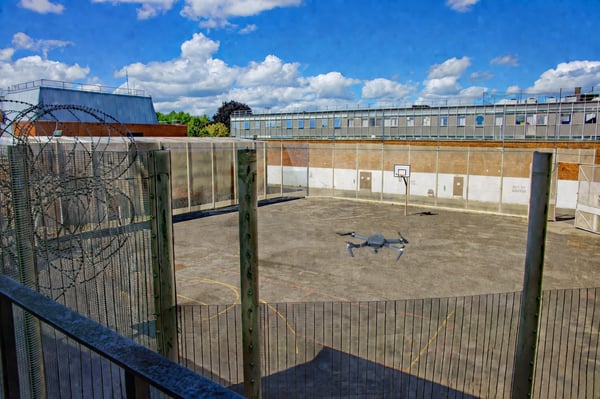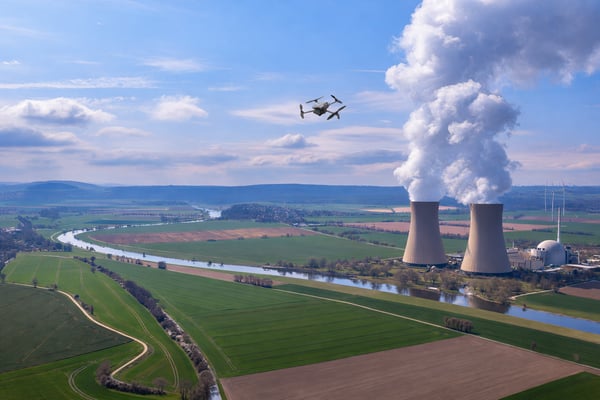
For years, drone activity around energy sites, substations, and other critical infrastructure has been treated like a nuisance: a quick flyover, a curious hobbyist, a one-off incident.
But the conversations coming out of the GridEx VIII report signal a change: utilities are now planning for unknown drone flights as a real security risk, especially when paired with other disruptive events.
GridEx is the largest energy grid security exercise in North America, involving 378 organizations and over 28,000 participants across the energy sector, government, and critical infrastructure partners, and their latest models signal an overall need to implement drone detection and airspace intelligence to tighten energy grid security.
1) GridEx VIII Put Drone Incursions on the Map
The GridEx VIII report highlights a critical gap: government and industry coordination is needed to address unknown drone activity around energy grids and other critical infrastructure locations.
In the exercise scenario, coordinated drone activity targeted substations and switchyards and contributed to load shedding and operational disruption. In short, the exercise showed that drones can be used to coordinate attacks against critical infrastructure sites worldwide.
What this means for utilities is that perimeter security isn’t enough. Energy sites need comprehensive visibility into all drone activity in their airspace, along with actionable airspace intelligence to inform timely, effective response.
2) Utility Security Must Close the Low-Altitude Visibility Gap
Traditional utility security programs were built solely for ground-based risks, relying on fences, cameras, security patrols, and other physical access controls.
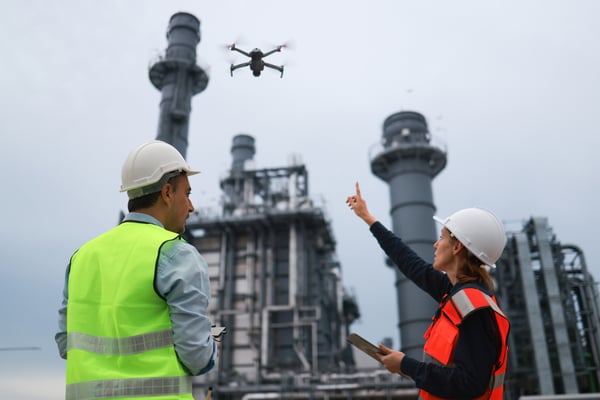
Those tools can tell you when someone approaches a gate, but they weren’t designed to tell you when a drone spends 10 minutes over a transformer yard collecting imagery, mapping equipment layouts, or testing response patterns.
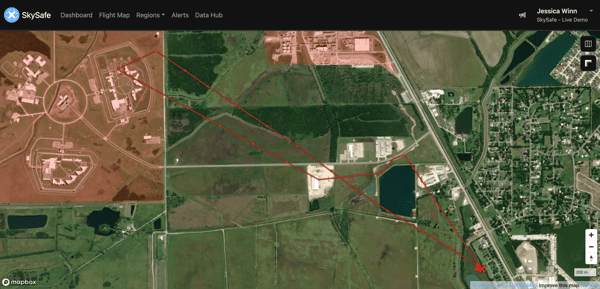
GridEx discussions highlighted the need for a shared operating picture and better situational awareness around critical infrastructure, especially low-altitude airspace where drone incursions are easiest to miss. Teams need immediate information about drone activity in their airspace altitude, flight paths, and historical patterns that indicate whether a drone has repeatedly operated over a site.
3) The Industry Needs to Deploy Drone Detection Capabilities
A key call to action from the GridEx VIII report is that U.S. and Canadian federal partners are being asked to work with industry to identify legally accessible technology to address drones operating near critical infrastructure.
That’s a major market signal. The question is shifting from “Is this risk real?” to “What can we put in place now to prevent drone disruptions?”
Drone detection and airspace intelligence are no longer theoretical. They are operational capabilities utilities can deploy today.
Energy companies need to actively evaluate and implement technologies that provide real-time visibility into drone activity over their facilities. By partnering with drone detection and airspace intelligence platforms like SkySafe, operators receive immediate alerts and actionable airspace intelligence, enabling faster, more informed decisions and reducing the risk of operational disruption.
4) GridEx Drone Simulation Reveals the Reality of Coordinated Grid Disruption
The 2026 GridEx VIII wasn’t a single-event drill. The exercise modeled layered disruption, including:
- cyber events
- coordinated physical incidents at substations
- drone-enabled activity
- telecom disruptions
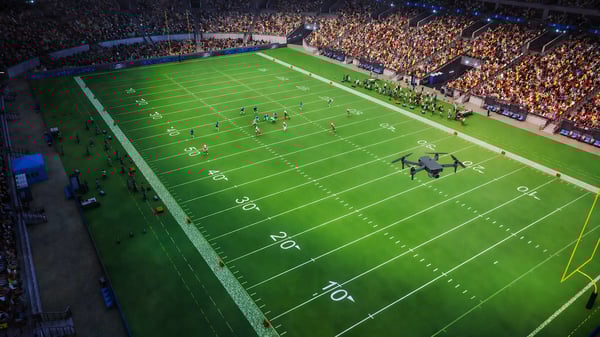
This exercise revealed potential weaknesses in existing procedures. When visibility drops during a coordinated incident, decision-making slows. Critical Infrastructure operators need better operational awareness, including drone detection and airspace intelligence that can be shared, reviewed, and acted on. With multiple drones often operating simultaneously, teams need a drone detection platform that continuously tracks the location, altitude, and flight path of every drone in their airspace, something cameras and visual monitoring alone can’t reliably achieve. That requirement should directly inform how platforms are evaluated: the ability to maintain real-time awareness across multiple concurrent flights and support response at scale.
Platforms like SkySafe meet this need by automatically tracking and logging all drone activity, allowing teams to monitor flights in real time and access a complete historical record for investigation and reporting. Flight data is preserved in structured, courtroom-ready forensic packages, enabling operators to identify patterns, document drone activity, and coordinate effectively with law enforcement
5) Cross-Sector Coordination Is Essential During a Drone Incident
GridEx included coordination across electric utilities, government agencies, telecommunications, natural gas, and water utilities, because real-world disruption doesn’t stay in one lane. Drone activity near infrastructure is rarely isolated. It can signal early-stage reconnaissance, a diversion, or a signal of broader multi-sector planning.
That’s why detection plus documentation matters: it gives teams something concrete to share with law enforcement and federal partners, and something defensible to review later.
SkySafe supports that coordination by producing drone forensics reports that capture the who/what/when/where of a drone incursion: time and duration, full flight and altitude information, and technical details that make the incident actionable for security teams and law enforcement agencies.
Just as important, SkySafe uses RF drone detection technology to provide the drone operator location so teams can move from “something happened overhead” to “here’s where response resources should be directed.”
Instead of a vague incident note, stakeholders get a package they can quickly share across agencies, including security operations, legal, executive leadership, and law enforcement, so everyone is working from the same facts and data sets. In multi-sector events, that common operating picture is the difference between parallel efforts and true coordination.
The Question Utilities Should Be Asking Now
As the GridEx VIII report makes clear, the conversation has moved beyond “Do we have a drone problem?”
The reality is that drone activity around critical infrastructure is already occurring. The more relevant question is whether your organization has visibility into what’s happening in the airspace around your facilities.
Today, most utilities don’t. GridEx VIII highlights that gap and the operational risk that comes with it.
Closing that low-altitude visibility gap requires deploying drone detection and airspace intelligence that delivers real-time awareness, historical context, and actionable data. SkySafe enables critical infrastructure operators to monitor airspace activity, improve coordination, and maintain defensible records for incident response.
Learn more about drone detection for critical infrastructure.