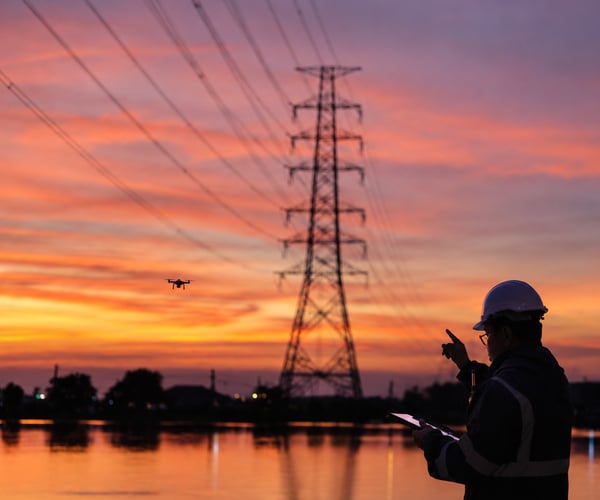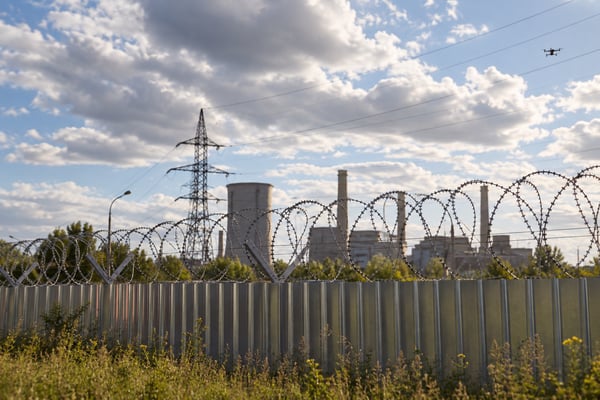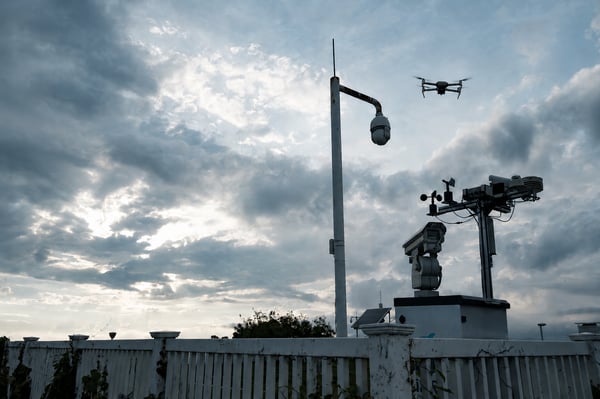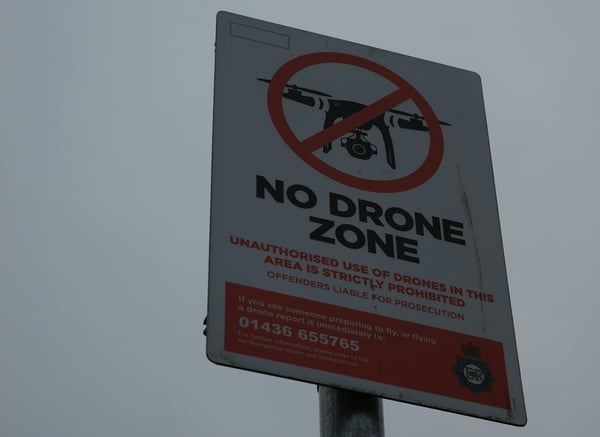
When a drone appears overhead, the first question is simple: what is happening and should we be concerned? Tracking drone flight history is how operational teams, airport ops, and critical infrastructure leaders turn a blurry “we saw something overhead” into actionable insights.
The right approach to tracking drone flight history combines flight telemetry (what the drone does in the moment) with historical logs (what happened over time, across days or months). Together, this data allows teams to determine potential pilot intent and threat levels that enable rapid and appropriate responses to drone incursions.
As drone traffic increases, having a system of record for airspace activity is just as important as cameras and access control. This post explores how to track drone flight history using telemetry and historical logs, what to capture, and how teams use that data for investigations, compliance, and operational decision-making.
What Is Drone Flight Telemetry
Drone telemetry is the stream of data that tracks a drone flight in real time. It typically includes time-stamped details like location, altitude, speed, heading, and flight status, which are the core building blocks for reconstructing a flight path. For teams responsible for securing critical airspace, telemetry turns a fast-moving drone incursion into actionable data.
Drone telemetry data also helps distinguish between routine activity and something that doesn’t match expected behavior. When you capture telemetry reliably, you’re not guessing where the drone went, you’re replaying it. That’s the difference between “we think it came from the north” and “it launched here, traveled this corridor, and hovered at this point.”
Telemetry also matters because drone incidents rarely happen in perfect viewing conditions. Night operations, long distances, cluttered skylines, and distractions make visual tracking unreliable. This consistent, timestamped data supports both decisions in the moment and analysis later. It can also reduce confusion during overlapping activity, like multiple drones appearing at once.
And when you’re building an incident narrative, telemetry provides the “movement story” that ties everything together. If your team has to brief leadership or support a case, telemetry is the backbone of your timeline.
Create a System of Record for Drone Incidents
Historical logs are the stored record of detected drone flights over time, organized so teams can search, filter, and replay past events. Think of logs as the “memory” of your airspace: they let you go back to a specific date and time, see what appeared, how the drone behaved, and how long it stayed. This is especially important for unknown drone flights, where the real impact may be discovered later. A facility can find signs of tampering days after a drone incursion, or an airport can review a near-miss report after the fact.
Without historical logs, you’re left with fragments: dispatch notes, camera clips, and inconsistent recollections. With historical drone flight logs, you can validate what happened and build a consistent, legally defensible account.
The real value of this system of record shows up when you connect incidents to read the entire story. Patterns emerge: recurring flight corridors, repeat appearances at shift-change times, or activity spikes during certain events. Historical drone flight data also supports operational improvements, like adjusting patrol routes, refining escalation playbooks, or identifying the best locations for sensors.
For risk and compliance teams, historical drone flight logs become proof that your organization can demonstrate awareness and response. And for investigations, historical logs help answer the critical questions: who flew, where, when, and what exactly occurred.
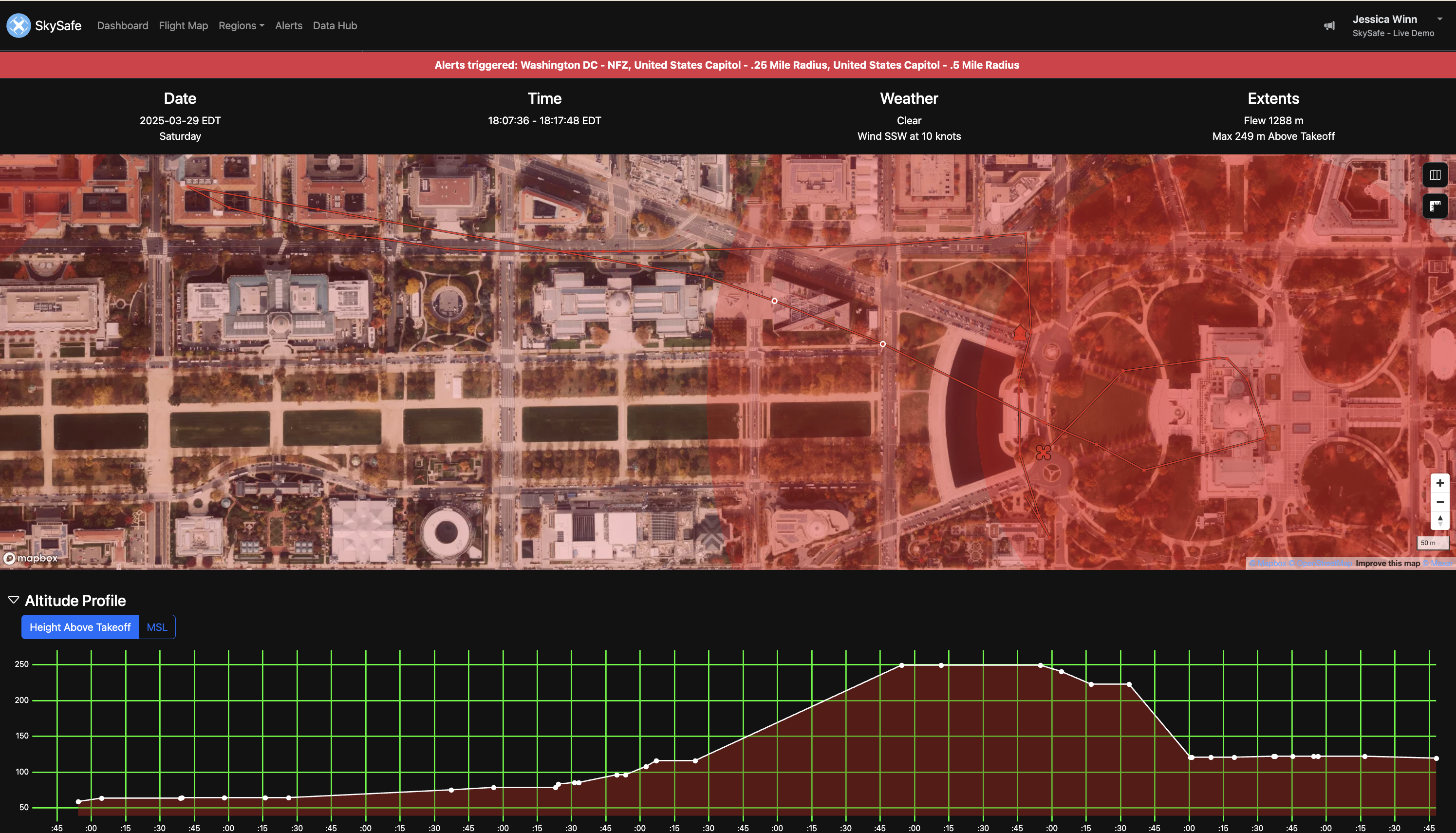
SkySafe logs every detection with time-stamped telemetry, allowing teams to replay flight paths with precision. By filtering past activity by RF ID or serial number, location, time, and behavior, you can instantly identify repeat patterns. When an unknown drone enters your airspace, you can immediately check its history to see if it has appeared in your airspace before, or above other secure areas. This historical context transforms raw data into actionable drone detection and airspace intelligence, ensuring a fast, informed response to every threat.
How to Use Historical Logs to Investigate Unknown Drone Flights in Critical Airspace
To investigate unknown drone flights, build a repeatable workflow around historical logs. Start by defining the detection window: when was the drone first detected, when did it leave, and were there any gaps in detection. Replay the flight path to pinpoint where the drone lingered or encroached on sensitive perimeters, like runways or substations. By comparing these events to prior logs, airspace intelligence and drone detection becomes a force multiplier, uncovering flight patterns that span weeks or years.
Next, correlate these logs with dispatch notes, video feeds, and operational timelines. Matching behaviors across multiple days helps distinguish deliberate reconnaissance from opportunistic flights. Ultimately, historical data shifts your team from a reactive scramble to a proactive posture, making even unpredictable incursions manageable.
Turning Flight History into Actionable Airspace Intelligence
Tracking drone flight history at scale isn’t just about collecting data. It’s about having the right tools to make that data usable in real time and over time. SkySafe provides a structured way to organize, search, and interpret flight activity so teams can move quickly from detection to understanding.
With flexible labeling, teams can classify detected drones in whatever way aligns with their operations, creating a shared language across security, operations, and investigations. Known or expected activity can be quickly identified and filtered out, while anything that requires attention stands out immediately. Over time, these labels bring structure to historical data, turning raw detections into clear, searchable intelligence.
SkySafe also enables teams to replay flights, analyze patterns, and connect activity across time and location. Instead of isolated incidents, organizations gain a continuous record of how their airspace is being used. This makes it easier to identify recurring behaviors, understand trends, and support investigations with precise, time-stamped data.
The result is a system where flight history is not just stored, but actively used. Teams can track patterns, investigate incidents with confidence, and maintain a clear, consistent view of their airspace without adding operational complexity.
How to Determine Drone Pilot Location
Ultimately, an unknown drone is only part of the equation. Due to the widespread availability of drones, the operator is the most important component of any drone incident. Capturing a drone operator is the fastest way to stop repeat drone incursions. While the drone itself is often disposable, the person flying it is the real point of accountability.
When you can tie an incident to an operator, you can move from “something happened in our airspace” to a clear, defensible legal case, with time-stamped facts that law enforcement can act on. It also improves safety in critical airspace: locating the operator quickly can de-escalate a situation before it disrupts operations or puts people at risk. Just as importantly, it creates deterrence. Drone operators are far less likely to fly over restricted airspace when they know activity can be traced back to them. And For legitimate teams conducting approved flights, operator identification supports deconfliction and reduces false alarms, so response resources stay focused.
SkySafe’s platform uses RF-based drone detection to immediately identify pilot location, helping responders move from detection to action without delay. Combined with drone detection and airspace intelligence, that operator-location insight supports faster response, better documentation, and stronger post-incident investigations.
Building Courtroom-Ready Evidence with SkySafe
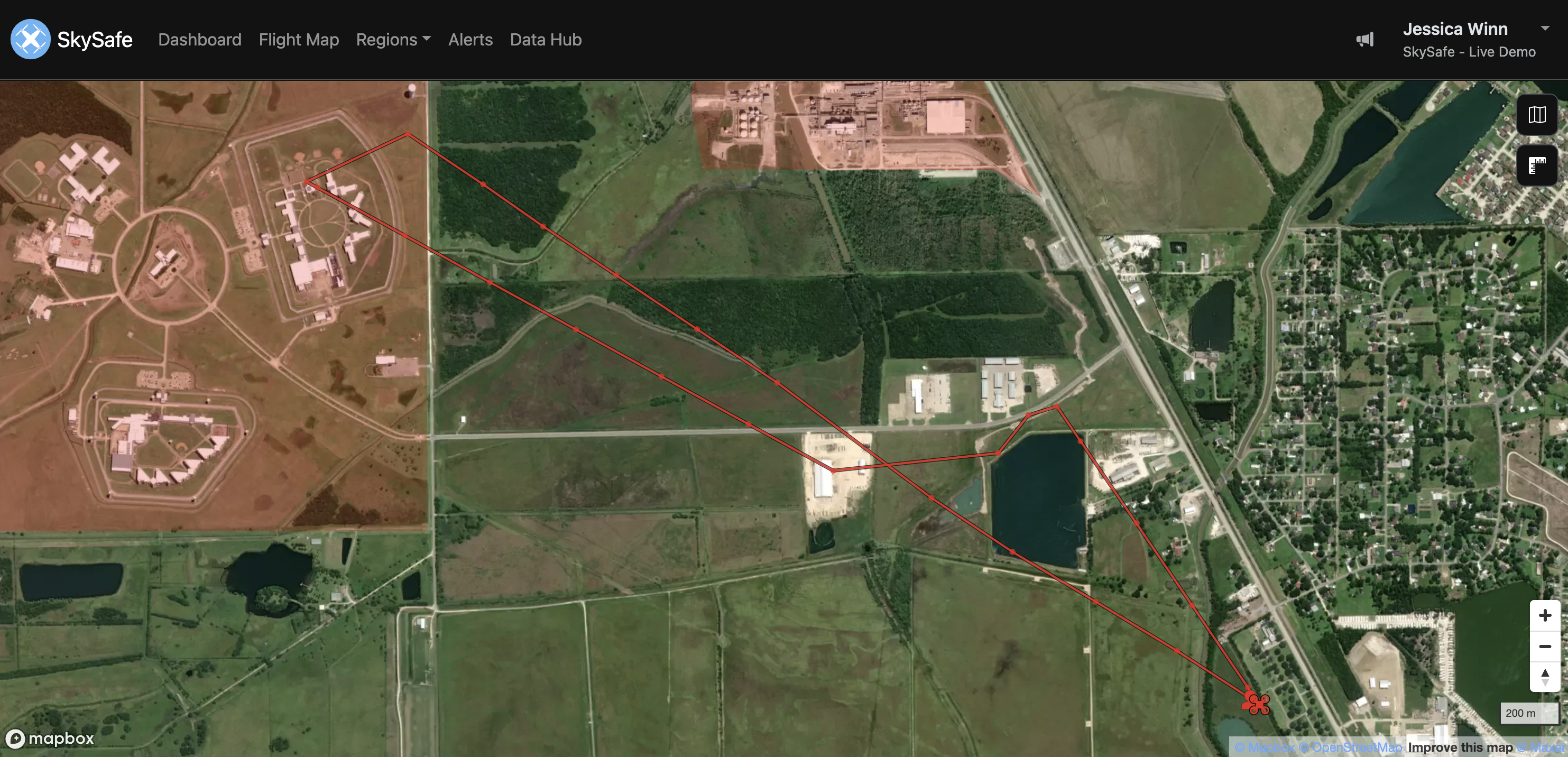
When explaining incidents to leadership, legal teams, or regulators, your evidence must be "defensible." This requires time-stamped, tamper-proof telemetry and historical logs that eliminate subjective interpretation. A clear, documented timeline provides the necessary leverage to prosecute bad actors and prevent future incursions. Choose a platform like SkySafe that delivers courtroom-ready reports, covering both individual flights and long-term historical patterns.
SkySafe’s drone Forensics-as-a-Service empowers teams to turn a drone incursion into courtroom-ready evidence by preserving the full story: time-stamped detections, flight telemetry, historical logs, and a clear audit trail. Instead of relying on shaky eyewitness accounts or scattered screenshots, you get a consistent evidence package that supports incident reports, investigations, and follow-up with law enforcement.
Drone forensics is essential because drones are cheap and easily replaceable, but the people flying them are not. In the modern world of affordable drones, accountability is the real deterrent. By tracking repeat flights and identifying the operator location, SkySafe helps detain and prosecute bad actors. This documentation helps prosecutors focus on the human behind the controller, not just the drone that showed up for a few minutes. It’s a practical extension of drone detection and airspace intelligence: not just seeing activity, but preserving proof that can prevent future incidents.
Turn Drone Incursions into Actionable Airspace Intelligence
Unknown drone flights are a decision problem as much as a visibility problem. While telemetry provides the real-time "what," historical logs reveal the long-term "why." By combining response, investigation, and risk management, organizations can replay events, identify patterns, and prosecute bad actors. For airports and critical infrastructure, this layer of drone detection and airspace intelligence is now a vital layer of modern security.
If you want to see what this looks like in practice, schedule a demo with our team! They’ll walk you through perimeter setups, best practices, and even example responses to help secure your airspace.