The sky used to feel empty. Now it’s filled with signals, activity, and unknowns.
From consumer drones to commercial inspection fleets, unmanned aircraft are everywhere. And while many flights are legitimate, the rise in unknown drone flights near critical infrastructure, airports, stadiums, and correctional facilities is forcing security teams to rethink how they protect their airspace.
That’s where Drone RF detection steps in, quietly, passively, and powerfully.
It doesn’t jam. It doesn’t interfere. It simply listens. And in today’s airspace, listening is everything.
What Is Drone RF Detection?
Drone RF detection identifies drones by analyzing the radio frequency (RF) signals transmitted between a drone and its controller. Every connected drone continuously communicates, sending telemetry, control inputs, and often live video feeds. These transmissions create distinct RF signatures that can be detected, classified, and tracked.
Unlike visual systems that rely on line of sight, RF detection focuses on the signal itself. In many cases, it can detect a drone as soon as it powers on, even before it launches into the airspace.
This approach is passive. RF drone detection does not jam signals or interfere with communications. It simply listens and analyzes, making it ideal for sensitive environments where operational continuity is critical.
Why RF Drone Detection Is Essential
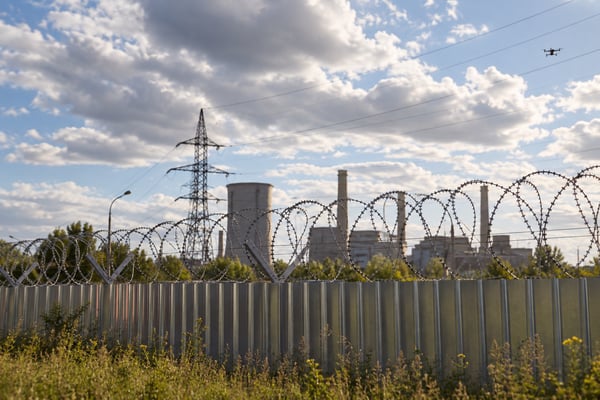
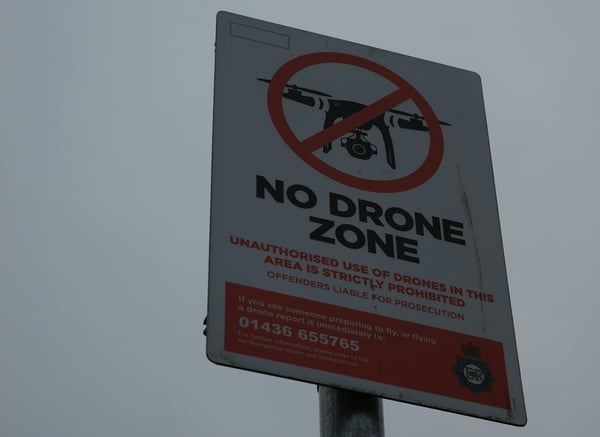
Drone incursions are no longer isolated events. Airports have reported thousands of sightings, and sporting events have been paused due to unexpected drone activity. Correctional facilities face ongoing drone contraband drops. And critical infrastructure operators are encountering unidentified drone activity, putting national grid security at risk.
The challenge isn’t just the presence of unknown drones, but the lack of real-time insights.
When leadership asks, “What happened?” security teams need more than anecdotal eyewitness reports. They need actionable data. RF drone detection provides that clarity by transforming even brief events into documented situational awareness.
From Detection to Drone Detection and Airspace Intelligence
Basic detection answers one question: Is there a drone? But modern drone detection and airspace intelligence platforms have evolved to deliver so much more. RF-based drone detection platforms, like SkySafe, can identify drone make and model, track flight paths, analyze altitude and speed, and locate the operator’s position.
This turns a fleeting drone sighting into actionable insight. Organizations can determine where the drone launched, how long it was present, whether it has flown in this airspace before, whether its behavior aligned with approved operations, and what risks it introduces, all in real time.
In regulated industries, this historical record becomes critical. Compliance audits, insurance reviews, and legal proceedings require defensible data, not just assumptions. Drone detection and airspace intelligence provides that system of record.
Supporting Legitimate Drone Operations
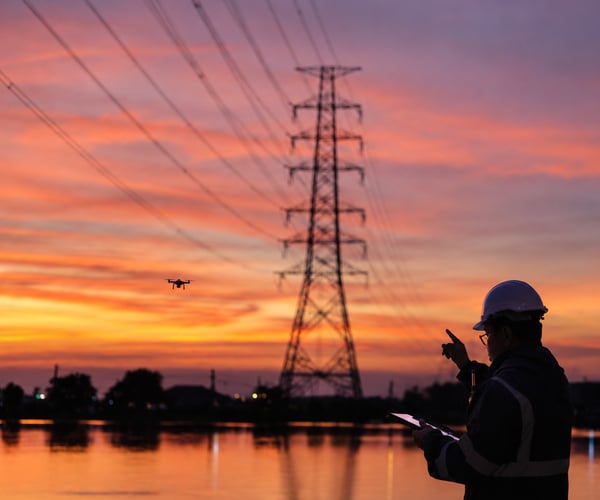
Drone detection and airspace intelligence only work when they account for a critical reality: most drone flights are legitimate and should not be treated as threats. Many organizations rely on drones for inspections, surveying, and emergency response. The real risk lies in failing to distinguish between your legitimate flights and unknown activity.
RF drone detection enables organizations to validate approved operations, while flagging deviations in real time. This protects inspection programs, strengthens compliance posture, and reduces liability.
A comprehensive drone inspection program will log the date, time, and purpose of the flight. Airspace intelligence takes this recordkeeping to the next level by showing which drone flew, the full timestamps and flight trajectory, and whether it aligns with policy. This enhanced information helps prove compliance and ensure that drone inspection programs are meeting the operational needs of each site.
RF Drone Detection vs. Traditional Technologies
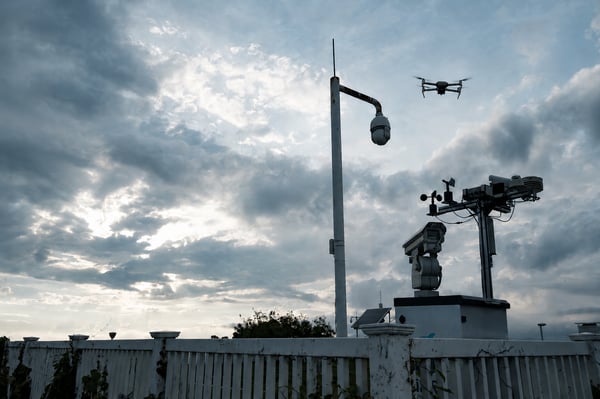
Radar and cameras have long been the foundation of perimeter security, but they were never designed with small consumer drones in mind. Radar systems detect physical objects by bouncing radio waves off targets and measuring the return signal. While effective for aircraft and larger objects, radar can struggle with small, lightweight drones that have minimal radar cross-sections. Low-altitude flights, cluttered urban backdrops, and interference from buildings or terrain can all complicate detection. In busy environments, radar may also generate false positives from birds or debris, requiring additional verification.
Cameras, on the other hand, depend entirely on line of sight. Lighting conditions, weather, obstructions, and distance all affect their performance. A drone flying at dusk, against a complex skyline, or partially obscured by buildings can be difficult to visually confirm. Even when captured on camera, identifying the make and model, or locating the pilot, often remains out of reach. Visual systems show that something is there, but they can’t provide the full story.
RF drone detection takes a fundamentally different approach. Rather than relying on visual identification, it passively analyzes the communication link between the drone and its controller, enabling classification of drone types, reconstruction of flight paths, identification of manufacturer and model, and localization of the operator.
This signal-based method provides insight that visual technologies alone cannot deliver. It answers not just, “What is in the sky?” but, “What exactly is it, who is operating it, and where did it launch?”
In complex environments such as airports, critical infrastructure sites, ports, or stadiums, this added visibility turns awareness into action. The result is clearer situational awareness, faster decision-making, and far fewer unanswered questions when a drone incursion occurs.
Delivering Real Accountability Using RF Drone Detection
Detecting drones is only the first step. Real airspace security requires accountability for the operators themselves.
When a drone incursion occurs, one question immediately rises to the top: Who was operating it? Without that answer, enforcement becomes difficult and deterrence becomes nearly impossible.
Advanced drone detection and airspace intelligence platforms leverage RF analysis to locate operators in real-time. By analyzing the communication link between the drone and its controller, RF-based systems can deliver the operator’s location to security and law enforcement teams, allowing them to apprehend suspects. And while drones are cheap and easily replaceable, the operators are not. Delivering real accountability means being able to detect drone activity and use that evidence to prosecute malicious operators.
From Drone Incident to Evidence
Accountability also depends on documentation. In high-stakes environments, teams must be prepared to support investigations, regulatory reviews, or prosecution. Drone forensics plays a central role here. A comprehensive forensic record may include:
- Flight path history
- Altitude, speed, and duration
- Launch and landing points
- Operator location data
- Time-stamped event logs
- Drone make and model identification
This forensics data creates a defensible chain of custody for every drone event. Instead of relying on eyewitness accounts or incomplete video footage, organizations can produce structured, time-synchronized records that stand up to scrutiny.
For law enforcement and security teams, drone forensics can strengthen cases against individuals responsible for contraband drops, reckless flights near aircraft, or other dangerous drone incursions. Detailed flight metadata and geolocation records provide objective evidence that can support charges and regulatory enforcement.
Just as important, visible accountability creates deterrence. When operators understand that drone activity can be traced back to its source, the risk becomes clear. Drone operators learn that airspace is no longer anonymous.
RF Drone Detection: Building a System of Record for the Sky
Airspace is becoming as regulated and scrutinized as physical and digital environments. Organizations that treat drone detection as a temporary alert system miss the larger opportunity. When RF drone detection is paired with operator tracking and forensic documentation, it becomes a system of record.
SkySafe’s RF drone detection delivers more than alerts. It provides the airspace intelligence needed to identify operators, document every flight event, and generate prosecution-ready forensic records. By transforming anonymous drone incursions into traceable, time-stamped evidence, SkySafe empowers organizations to move from uncertainty to control. The result is stronger enforcement, greater deterrence, and a secure, well-managed airspace where critical operations, people, and assets are protected with confidence.
SkySafe’s drone detection and airspace intelligence platform delivers more than awareness. It delivers accountability.
And in a world where drone incursions can disrupt operations, create safety hazards, and introduce legal exposure, accountability is what turns visibility into real protection. See RF drone detection in action! Schedule time with SkySafe.